

Coinbase suddenly adjusted its KYC rules for Chinese users, lowering the registration threshold.

On July 14, several cryptocurrency users reported that Coinbase has changed its registration process: users on the Chinese mainland can now register using their ID card and mobile phone number, without requiring proof of an overseas address.
According to BlockWeeks verification, the Coinbase platform is currently in a registrable state, with identity verification taking only 1 minute.

*Screenshot sourced from BlockWeeks
I.Coinbase suddenly adjusted its KYC rules for Chinese users, lowering the registration threshold
For a long time, influenced by regional regulatory requirements and Coinbase's compliance strategy, users in mainland China have not been covered by Coinbase's services.
As a cryptocurrency exchange that emphasizes compliant operations, Coinbase conducts risk assessments based on the user's geographic location, identity information, and regulatory requirements, and verifies whether users meet the platform's service eligibility criteria through a rigorous KYC process.
According to public records, in the past, Chinese users typically needed to provide documents such as a Chinese passport and proof of overseas address to complete Coinbase account verification, resulting in relatively high platform entry barriers.
This adjustment has significantly lowered the certification threshold; according to feedback from some user tests, identity verification can now be completed using an ID card and a mainland Chinese address, with the verification process being more efficient than in previous versions.
However, this adjustment remains uncertain at present.
As of July 15,2026, Coinbase has not yet issued a formal announcement on this matter, nor have the information on its official website been updated accordingly.
👉The latest information on the official website shows that in China, only Hong Kong and Taiwan can use passports as supported identification documents.
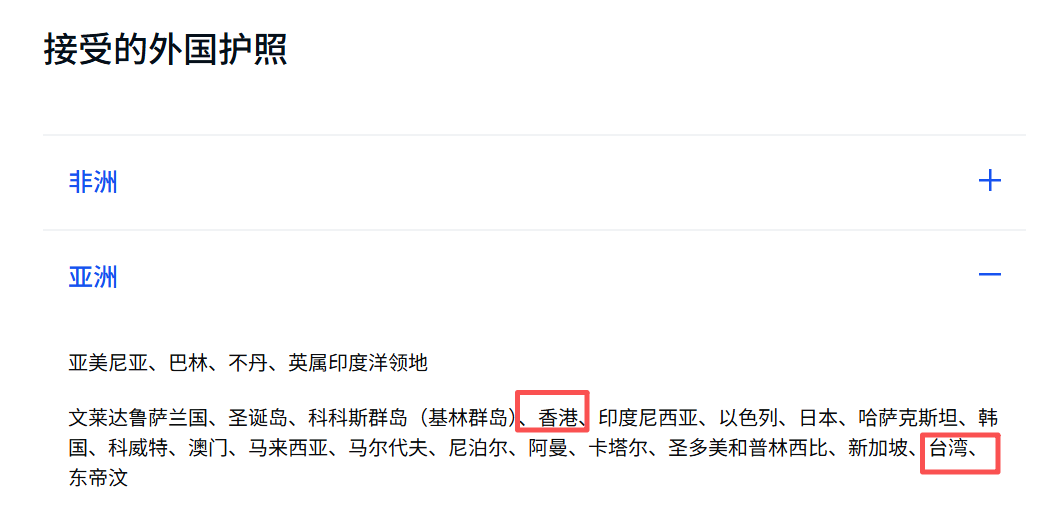
*Screenshot sourced from Coinbase's official website
Quick Science Fact:
Coinbase is a U.S.-based cryptocurrency exchange platform founded in 2012. As one of the world's leading cryptocurrency platforms, Coinbase has long positioned itself around security and compliance, providing global users with services such as cryptocurrency trading and asset storage. In 2021, Coinbase went public on the Nasdaq, becoming the first major cryptocurrency exchange to list on a stock exchange in the crypto industry.
II.What signal is Coinbase sending with this move? The strategy for its overseas market expansion is undergoing a transformation
Coinbase's recent changes to its KYC rules can be understood within the broader context of evolving competition dynamics in the global cryptocurrency industry.
In recent years, competition in the global cryptocurrency market has been shifting from competition based solely on transaction volume to competition centered on comprehensive service capabilities.
As the industry gradually matures, leading platforms are beginning to explore new growth opportunities through avenues such as stablecoins, institutional services, on-chain ecosystems, and digital asset infrastructure.
👉As a U.S.-listed cryptocurrency company, Coinbase has continuously expanded its business scope in recent years. Beyond its traditional digital asset trading business, it has established a presence in institutional custody, stablecoin services, and enterprise-grade digital asset solutions, while steadily strengthening its competitive advantages in the areas of compliance, security, and institutional services.
In this context, user coverage capability has become a crucial foundation for platforms to expand their global business operations. For large international trading platforms, lowering the entry barriers for certain users can help expand the potential user base, while simultaneously enhancing the scale of the platform's ecosystem and its ability to reach target markets.
Meanwhile, regional competition in the global cryptocurrency market is also evolving. In some parts of Asia, digital asset markets have maintained high levels of activity over the long term; furthermore, the gradual refinement of Hong Kong's virtual asset regulatory framework has positioned Asia as one of the key markets attracting attention from international cryptocurrency enterprises.
From an industry perspective, Coinbase's recent adjustment to its certification process appears more like an attempt by the platform to optimize its user ecosystem during its global business expansion, reflecting how leading compliance-focused platforms are seeking new avenues for growth.
III.Behind Coinbase's open registration initiative, China's regulatory boundaries have not changed
Coinbase's adjustment of its user authentication rules does not imply any change in the relevant regulatory environment.
China's regulatory requirements regarding activities related to virtual currencies have remained unchanged. Regulatory authorities continue to emphasize that virtual currencies do not hold the status of legal tender, and that relevant business activities do not fall within the scope of recognized financial services.
🔸On November 28,2025, the People's Bank of China, together with the Ministry of Public Security, the Supreme People's Court, and 13 other departments, held a "Coordination Mechanism Meeting on Combating Virtual Currency Trading and Speculation," reaffirming that virtual currencies do not possess the same legal status as legal tender, lack legal redeemability, and should neither be nor can be circulated or used as currency in the market.

*The screenshot is sourced from the official website of the People's Bank of China.
🔸On February 6, 2026, the People's Bank of China, together with eight other ministries and commissions, issued the "Notice on Further Preventing and Addressing Risks Related to Virtual Currency" (commonly referred to as "Document No.42"), which explicitly states that all business activities related to virtual currency constitute illegal financial activities and are strictly prohibited under all circumstances.

Coinbase's recent adjustment to its identity verification process only signifies a change in the platform's own user access method.
For encrypted users, two key issues require attention:
Open registration does not imply legal recognition
Coinbase has adjusted its user authentication process but has not altered the regulatory status of its cryptocurrency-related business across different regions. For users, completing platform registration and identity verification merely signifies obtaining access to the platform; it does not imply that the relevant services possess a corresponding legal foundation, nor does it mean that users' personal rights and interests can be effectively protected by law.
Under China's current regulatory framework, to continuously combat illegal financial activities related to virtual currencies, users must clearly define their compliance boundaries and associated risks.
Being able to register does not mean you can trade.
Successful registration does not mean that users can access all services of the platform.
Due to variations in regulatory requirements across different regions, overseas cryptocurrency trading platforms typically impose restrictions on trading permissions, product features, and fund-related services based on the user's geographic location and compliance requirements; therefore, the actual applicable scope should be confirmed by referring to the platform's official announcements.
Note: Some content in this article is sourced from publicly available online materials; if any copyright infringement occurs, please contact us for modification or removal. This article is intended solely for industry analysis and educational purposes and does not constitute any investment advice. The copyright and final interpretation rights of this article belong to ChainVision WEB3. Readers are advised to view this content rationally, as the cryptocurrency market carries high risks, and investors should exercise caution when investing.